Who is jaw surgery for?
- An underbite, overbite or open bite that orthodontics cannot fully correct
- Difficulty biting, chewing or swallowing, or excessive wear on the teeth
- Facial asymmetry, a receding chin or a jaw that sits too far forward
- Obstructive sleep apnea related to the position of the jaws
- Jaw pain or strain caused by a bite that does not come together
Experience matters
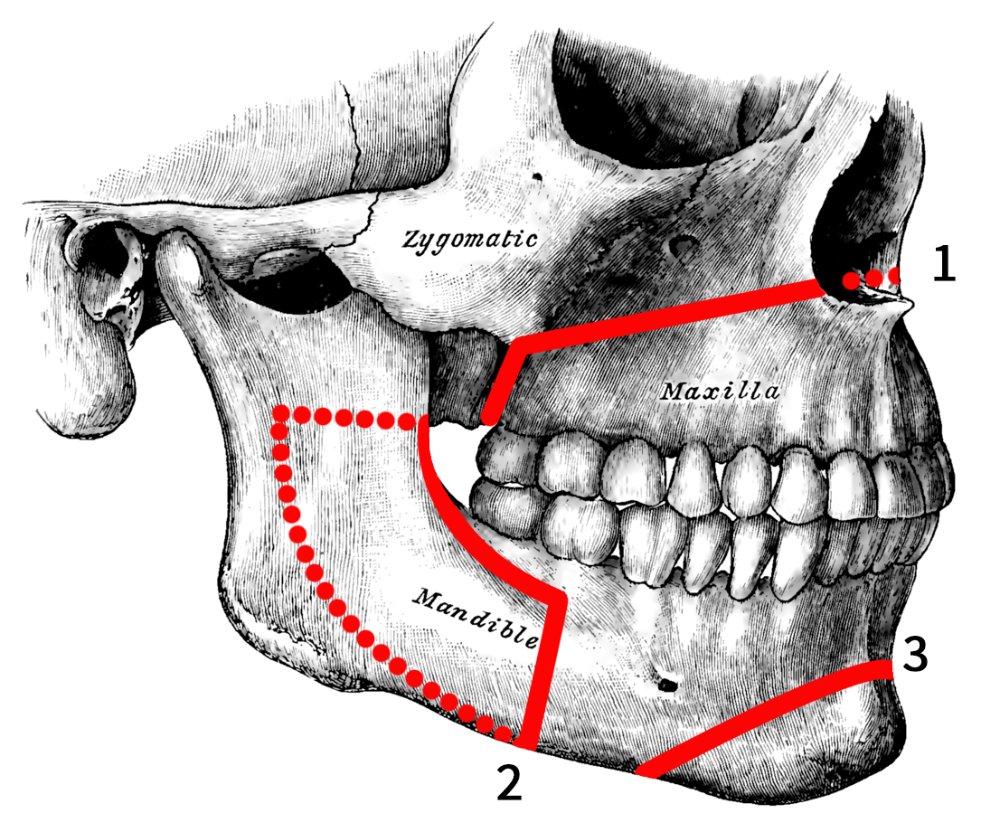
Corrective jaw surgery moves the foundation of the face. The precision of the planning and the surgery determines how your bite fits together, how your face looks and how smoothly you recover. Dr. Olendorf has performed hundreds of orthognathic surgeries over his career, including Le Fort I surgery of the upper jaw, sagittal split surgery of the lower jaw, genioplasty of the chin and combined double-jaw procedures.
How it works
1. Orthodontics first. Most patients wear braces or aligners for a period before surgery so the teeth are positioned for the new jaw relationship.
2. 3D planning. Using CT imaging and digital models, Dr. Olendorf plans each movement of the jaws to the fraction of a millimeter, then has custom surgical splints and guides made for your case.
3. Surgery. Jaw surgery is performed in the hospital under general anesthesia. The cuts are made inside the mouth, so there are typically no visible scars on the face. The jaws are secured in their new position with small titanium plates and screws.
4. Recovery and finishing. Swelling peaks in the first few days and settles over the following weeks. Most patients return to school or desk work within two to three weeks. Your orthodontist then fine-tunes the bite over the following months.
A team approach
Jaw surgery is a partnership between you, your orthodontist and our surgical team. We coordinate timing, records and planning with your orthodontist from the first visit through the final adjustments.
Cost & insurance. Because jaw surgery is often medically necessary, medical insurance may cover some or all of it. We're happy to discuss your plan and pricing at your consultation appointment. Come in and meet our team.
Frequently asked questions
Will my jaws be wired shut?
Usually not. Modern plates and screws hold the jaws securely, so most patients can open their mouth after surgery. Light elastics are often used to guide the bite while you heal.
How long is the hospital stay?
Many patients go home the same day or after one night, depending on the procedure and how you are feeling.
What will I eat afterward?
You will be on a liquid and then soft diet for several weeks. We give you detailed instructions and meal ideas before surgery.
How long until I see the final result?
Most swelling resolves within six weeks, with the final contours of the face settling over several months.
Related topics